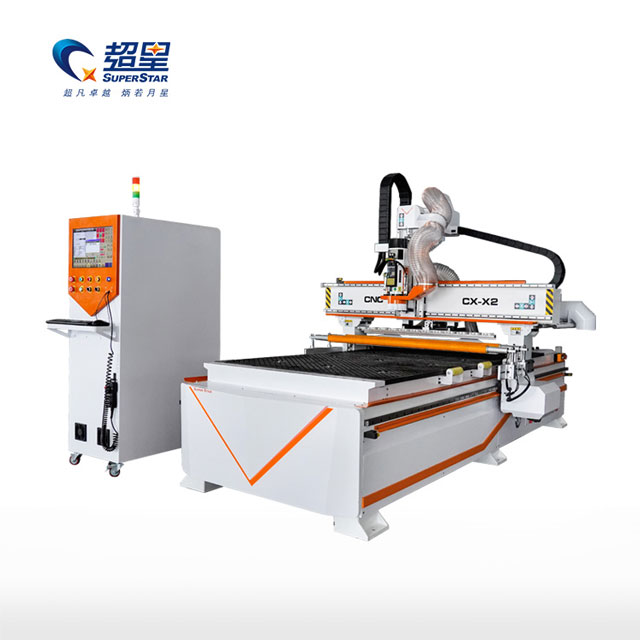
In the modern woodworking industry, precision and efficiency are not just luxuries—they are necessities. Whether you are running a custom furniture business, a cabinetry shop, or an industrial manufacturing plant, upgrading to a high-quality Wood CNC Router is one of the most significant investments you can make.
However, with thousands of options available—from hobbyist desktop machines to industrial 5-axis centers—finding the right fit can be overwhelming. A wrong choice can lead to production bottlenecks or wasted budget.
In this guide, we leverage our industry expertise to break down exactly what you need to look for. We will cover power requirements, machine size, budget considerations, and recommend top-performing models to help you make an informed decision.
Why Investing in the Right CNC Router Matters
A CNC (Computer Numerical Control) router is the heart of a modern workshop. It automates the cutting, carving, and milling of wood, plastics, and composites. Choosing the correct machine ensures:
Higher ROI: Faster production speeds mean more orders fulfilled.
Material Savings: Precision nesting software reduces wood waste.
Versatility: The ability to switch from intricate 3D carving to heavy-duty cutting instantly.

Key Considerations: What to Look for Before Buying
When browsing through a Wood CNC Router catalog, focus on these four critical technical specifications:
1. Spindle Power and Type
The spindle is the "engine" of your router.
2. Working Area (Table Size)
Your workspace and material size dictate the machine size.
4x8 ft (1300 x 2500 mm): The industry standard (often called the 1325 CNC Router). It fits standard plywood sheets perfectly.
5x10 ft (1500 x 3000 mm): Ideal for larger cabinetry shops handling oversized MDF or solid wood slabs.
Custom Sizes: Smaller 6090 models are great for detail work, while larger formats suit production lines.
3. Control System & Software
The "brain" of the machine.
Look for reliable systems like Syntec, DSP, or Mach3.
Ensure compatibility with popular CAD/CAM software like ArtCAM, Type3, or Fusion 360. A user-friendly interface reduces the learning curve for your operators.
4. Machine Structure (Rigidity)
Never compromise on the frame. A heavy-duty, welded steel frame prevents vibration. Vibration is the enemy of precision; a flimsy frame will result in "chatter marks" on your wood, requiring expensive manual sanding later.
Top Recommended Wood CNC Router Models
Based on market trends and customer feedback, here are the types of machines that currently dominate the market. You can explore these specific configurations in our Wood CNC Router Product List.
1. The All-Rounder: Standard 3-Axis 1325 Router
Best For: Small to medium businesses, sign makers, and general furniture.
Why it wins: It offers the best balance of price and performance. It handles 90% of standard woodworking tasks including cutting, drilling, and engraving.
2. The Efficiency Beast: ATC (Automatic Tool Changer) CNC Router
Best For: High-volume cabinetry and door manufacturing.
Why it wins: Manual tool changes take time. An ATC CNC Router switches bits automatically in seconds, allowing you to perform roughing, profiling, and finishing in a single file run without stopping the machine.
3. The Multi-Head Router
Best For: Batch production of identical parts.
Why it wins: If you are carving four table legs or cabinet doors at once, a multi-spindle machine quadruples your output instantly.

Conclusion: Making Your Final Decision
Selecting the right Wood CNC Router involves balancing your current budget with your future growth goals. Don't just look for the lowest price; look for value. A robust machine with excellent technical support will pay for itself many times over through reliability and speed.
If you are ready to upgrade your workshop, browse our extensive collection of professional Wood CNC Routers to find the perfect match for your production line.
FAQ: Frequently Asked Questions
Q1: What is the difference between a stepper motor and a servo motor in a CNC router?
A: Stepper motors are cost-effective and good for standard speeds. Servo motors (often found on high-end ATC machines) offer higher speed, higher torque, and closed-loop feedback, meaning they never lose position during heavy cutting.
Q2: Can a Wood CNC Router cut aluminum?
A: Yes, most robust wood routers can cut soft metals like aluminum and brass, provided you use the correct bits, appropriate spindle speeds, and a mist cooling system.
Q3: How much does a 4x8 CNC router cost?
A: Prices vary significantly based on configuration (spindle brand, controller, motors). Entry-level industrial models are more affordable, while high-end ATC centers represent a larger investment. Contact us for a specific quote based on your needs.
Q4: What maintenance does a CNC router require?
A: Regular maintenance includes lubricating the linear rails, checking belt tension, cleaning the collets, and ensuring the water cooling system (if equipped) is flowing correctly.