Stone CNC Bridge Saw: Complete Guide for Quartz Countertop Fabrication
You are here:Home » News » Guide » Stone CNC Bridge Saw: Complete Guide for Quartz Countertop Fabrication
Stone CNC Bridge Saw: Complete Guide for Quartz Countertop Fabrication
Author: Aileen Xe Publish Time: 2026-04-17 Origin: Site
Introduction
Stone fabrication shops face increasing pressure to deliver precise, complex cuts faster while maintaining the quality that premium countertop customers expect. From simple straight cuts to intricate sink cutouts and beveled edges, modern stone processing demands equipment that combines accuracy, versatility, and reliability.
SUPERSTAR CNC has manufactured stone processing equipment since 2003, with bridge saws and CNC machining centers serving quarries, fabrication shops, and construction companies across 114 countries. Our stone equipment division combines German engineering precision with Chinese manufacturing efficiency to deliver professional-grade performance at competitive price points.
This guide covers everything stone professionals need to understand about CNC bridge saw technology and selecting the right machine for your fabrication operation.
What is a Stone CNC Bridge Saw?
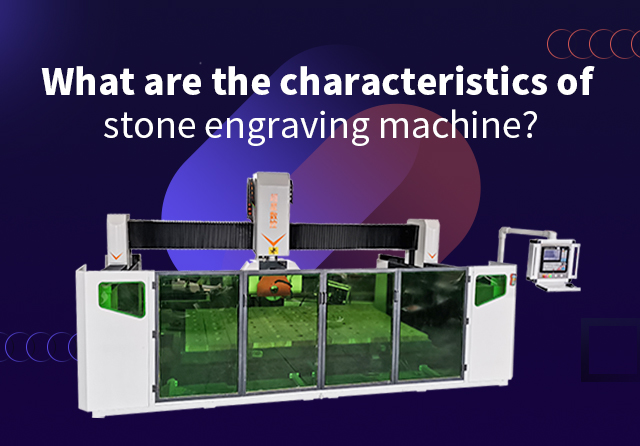
A stone CNC bridge saw is a computer-controlled stone cutting machine featuring a gantry-style bridge that moves over a stationary worktable. The cutting head—typically a diamond blade—mounts on the bridge and makes precision cuts according to programmed specifications.
Modern CNC bridge saws go far beyond simple straight cuts. Advanced systems perform:
Straight cuts at any angle
Circular cutouts for sinks and cooktops
Beveled edge cutting for counter edges
Contour cutting for custom shapes
Through cuts and partial depth grooves
Evolution from Manual to CNC Stone Cutting
Traditional stone cutting relied on manual bridge saws where operators positioned cuts by hand, measured with tape measures and templates, and made adjustments based on experience. CNC technology automates these processes, delivering:
Consistent accuracy: Every cut matches the program exactly
Reduced labor: One operator manages multiple machines
Complex capability: Shapes impossible to cut manually become routine
Faster setup: Digital files replace physical templates
Documentation: Programs archive for repeat orders
Technical Specifications for Professional Stone Fabrication
Bridge Saw Configurations
SUPERSTAR CNC offers bridge saw configurations matched to different production requirements:
Model Type
Cutting Capacity
Typical Application
Standard Bridge
3200x2000mm
Small-to-medium shops
Large Format Bridge
3500x2500mm
Medium production
Jumbo Bridge
4000x3000mm
Large slabs, architectural work
5-Axis Bridge Saw
3200x2000mm
Complex 3D profiling
Spindle and Blade Systems
Stone bridge saws use different spindle configurations compared to woodworking CNC machines:
Main Saw Spindle:
Power ratings from 11kW to 30kW depending on material hardness and cutting requirements
Water-cooled motors for continuous operation
Direct drive or belt drive configurations
Blade diameters from 350mm to 600mm
Angling Head Options:
0-90 degree tilting for bevel cuts
+/- 45 degree rotation for compound angles
5-axis heads for complex 3D profiles
Precision and Performance Metrics
Professional stone work demands tight tolerances:
Positioning accuracy: ±0.1mm over full cutting range
Repeatability: ±0.05mm consistently
Squareness: ±0.2mm across 3000mm lengths
Surface finish: Polished finish quality on cut edges
Stone Materials Processed by CNC Bridge Saws
Granite
Granite remains the premium choice for kitchen countertops despite competition from engineered stone. Its natural variation, hardness, and durability make it ideal for heavy-use applications.
CNC bridge saws handle all granite varieties from common commercial grades to rare exotic materials. Cutting parameters adjust for material hardness, with harder granites requiring slower feed rates and more aggressive diamond segments.
Quartz and Engineered Stone
Quartz countertop materials—including popular brands like Caesarstone, Silestone, and Cambria—present specific challenges. The engineered composition includes quartz crystals bound in polymer resin, requiring different cutting approaches than natural stone.
Key considerations for quartz processing:
Resin melting risk: Excessive cutting heat can melt binder materials
Chip resistance: Some quartz formulations are prone to edge chipping
Polish matching: Cut edges must match factory-polished surfaces
Consistency: Engineered materials cut more predictably than natural stone
SUPERSTAR CNC machines feature cutting parameters optimized for quartz materials, achieving clean cuts without chipping or thermal damage.
Marble and Limestone
These softer natural stones require gentler cutting approaches to prevent fracture and achieve clean edges. The calcite composition reacts differently to diamond tooling than silicate minerals.
Ultra-Compact Surfaces
New ultra-compact surface materials like Dekton and Lapitec push fabrication technology. Their extreme hardness and thermal resistance demand specialized cutting parameters and tooling.
Advanced Capabilities: 5-Axis CNC Stone Machining
For complex architectural projects, standard bridge saws reach limitations. 5-axis CNC machining centers overcome these constraints with full rotational capability.
What 5-Axis Stone CNC Offers
Five-axis machines add two rotational degrees to traditional XYZ positioning:
A-axis: Tilting head up to 90 degrees forward/backward
C-axis: Rotating head 360 degrees around vertical axis
This capability enables:
Undermount sink cutouts: Clean internal corners without manual chiseling
Complex edge profiles: 3D shapes beyond simple bevels
CNC duplication: Copying existing pieces with perfect accuracy
Inlays and mitering: Precision work for decorative applications
Texturing and carving: Artistic stonework including bas reliefs
4+1 Axis Configurations
Many stone fabricators benefit from 4+1 axis machines that add single-axis tilting to standard X/Y/Z/translational cutting. This configuration handles most complex work at lower cost than full 5-axis systems.
Workflow Integration for Stone Fabrication
Digital Templating
Modern stone fabrication begins with digital measurement:
Laser scanning: Capture existing countertops or cabinet dimensions
Mobile scanning apps: Tablet-based measurement tools
CAD design: Creating detailed shop drawings with cut lists
Nesting optimization: Arranging parts to minimize material waste
SUPERSTAR CNC machines import standard file formats including DXF, PLT, and proprietary CNC formats.
From Digital to Finished Stone
The typical workflow:
File import: Load cut program into machine controller
Material setup: Position stone slab on worktable
Reference point setting: Establish cut origin coordinates
Dry run verification: Check tool paths before actual cutting
Production cutting: Execute program with automatic tool changes
Quality inspection: Verify dimensions and edge quality
Edge processing: Polish or apply edge treatment as needed
Post-Cutting Operations
CNC cutting produces rough-finished edges. Final appearance requires:
Edge polishing: Grinding and polishing to match surface finish
Sealing: Applying penetrating sealers for stain protection
Lifting and handling: Proper techniques to prevent breakage
Installation preparation: Packing and transport protection
SUPERSTAR CNC Stone Equipment Advantages
Factory-Direct Value
As a manufacturer rather than a reseller, SUPERSTAR CNC offers competitive pricing without intermediary margins. Our 86,000 square meter facility produces complete machines and sources components through established supply relationships.
Application Engineering Support
Our technical team helps customers select appropriate configurations based on:
Typical material types and sizes
Required production capacity
Available workshop space and infrastructure
Budget constraints and financing needs
Future expansion considerations
Global Parts Availability
With warehouses across Asia, the Middle East, Europe, and the Americas, SUPERSTAR CNC provides timely spare parts delivery. Standard components ship within 48 hours; critical parts within 24 hours for urgent situations.
Training and Technical Documentation
Every machine includes:
Detailed operation manuals in multiple languages
Video training libraries covering common operations
Parameter reference guides for different materials
Preventive maintenance schedules and checklists
Electrical schematics and diagnostic procedures
Investment Analysis: Stone CNC Bridge Saw ROI
Cost Comparison: CNC vs. Manual Fabrication
Consider a mid-sized fabrication shop producing 150 countertops monthly:
Factor
Manual Methods
CNC Bridge Saw
Labor hours per job
12 hours
4 hours
Monthly labor cost
$18,000
$7,200
Material waste
8-12%
4-6%
Rework rate
5-8%
1-2%
Customer complaints
Frequent
Rare
Return on Investment
A standard SUPERSTAR CNC bridge saw priced at $45,000-$75,000 delivers monthly savings of $8,000-$15,000 through labor efficiency and waste reduction. Simple payback periods typically range from 4-9 months.
Beyond financial returns, CNC capability enables:
Larger project acceptance without capacity constraints
Complex designs that differentiate your business
Faster turnaround competing for premium customers
Reduced physical strain on skilled workers
Site Requirements and Installation
Workshop Infrastructure
Plan for these infrastructure elements:
Floor load capacity: 1500-2000 kg/m² for stone machinery
Power supply: 380V three-phase, 50-100A depending on machine size
Water supply: Continuous flow for blade cooling, 20-40 L/min
Drainage: Sloped floors and collection basins for slurry management
Ventilation: Air circulation and humidity control
Overhead clearance: Sufficient height for slab handling
Machine Footprint
Bridge saws require both the machine footprint and surrounding operational space:
Machine footprint: 4m x 3m to 6m x 4m depending on model
Material staging area: Equal to machine working area
Operator workspace: Minimum 1.5m around machine perimeter
Finished parts storage: Separate from production area
Frequently Asked Questions
What blade type is required for quartz countertop cutting?
Quartz requires continuous rim diamond blades with appropriate segment bonding for engineered stone. Segments should be sharp without being too aggressive, as excessive impact can chip quartz edges. SUPERSSTAR CNC recommends specific blade specifications for different quartz brands.
How long do diamond bridge saw blades last?
Blade life varies significantly based on material hardness, cutting parameters, and coolant management. Typical lifespans range from 200-500 linear meters of cut for granite and 300-600 meters for quartz before resharpening or replacement.
Can CNC bridge saws cut existing granite without damaging it?
Yes, CNC precision allows trimming existing countertops during remodeling projects. Careful measurement and programmed offsets accommodate tile or laminate edge treatments.
What maintenance is required for stone CNC equipment?
Daily maintenance includes blade inspection, coolant level checks, and surface cleaning. Weekly maintenance covers lubrication points, belt tension inspection, and calibration verification. Annual service includes full mechanical inspection and software updates.
Do you offer financing options for equipment purchases?
SUPERSTAR CNC partners with international financing companies to offer flexible payment options. Leasing, rent-to-own, and installment plans accommodate different business models and cash flow situations.
How does the warranty work for stone processing equipment?
Standard warranty covers manufacturing defects and component failures for 24 months. Extended warranties covering full service and parts are available. Warranty service handled through regional support centers or factory technicians.
Conclusion
CNC bridge saw technology has matured to deliver professional-grade performance accessible to shops of all sizes. The productivity gains, quality improvements, and capability expansion justify investment for any fabrication operation processing more than 30 stone slabs monthly.
SUPERSTAR CNC combines manufacturing excellence, global service infrastructure, and competitive pricing to support stone professionals worldwide. Our team helps you select the right configuration, plan your installation, and achieve production targets from your first day of operation.
Explore our complete range of stone CNC bridge saws and machining centers, or contact our sales team for personalized consultation on your fabrication requirements.
Written by SUPERSTAR CNC Stone Equipment Division
SUPERSTAR CNC has manufactured precision stone processing equipment since 2003, serving quarries, fabricators, and construction companies across 114 countries from our 86,000 square meter production facility in Jinan, China.